

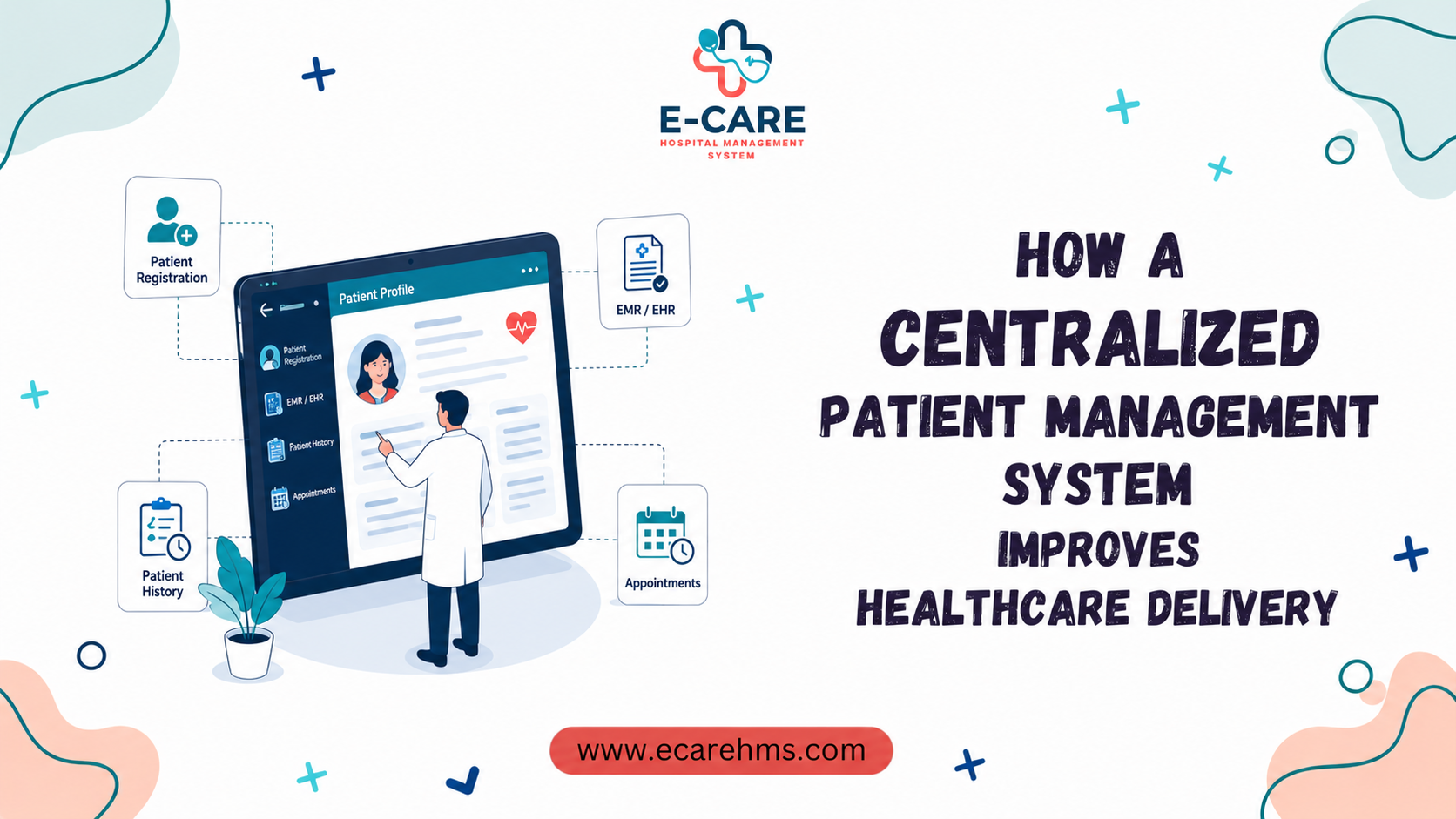
How a Centralized Patient Management System Improves Healthcare Delivery
Healthcare organizations today face increasing pressure to provide faster, more accurate, and patient-centered care while managing growing volumes of patient data. From patient registration and appointment scheduling to maintaining medical records and treatment histories, healthcare providers need a reliable system that keeps everything connected.
A Centralized Patient Management System is transforming the way hospitals, clinics, and healthcare institutions operate. By bringing all patient information into a single platform, healthcare providers can streamline workflows, improve communication, and deliver better patient outcomes.
In this blog, we'll explore how a centralized patient management system enhances healthcare delivery and why it has become a critical component of modern healthcare management.
The Need for Centralized Patient Management
Many healthcare facilities still struggle with fragmented systems, paper-based records, and disconnected departments. When patient information is scattered across multiple platforms, it can lead to:
- Delayed access to patient records
- Communication gaps between departments
- Increased administrative workload
- Appointment scheduling conflicts
- Inaccurate or duplicate patient data
- Reduced patient satisfaction
A centralized patient management system addresses these challenges by creating a single source of truth for all patient-related information.
What Is a Centralized Patient Management System?
A Centralized Patient Management System is a digital platform that stores, manages, and updates patient information across the entire healthcare organization.
It integrates key healthcare processes such as:
- Patient Registration
- Electronic Medical Records (EMR/EHR)
- Patient History Management
- Appointment Scheduling
- Clinical Documentation
- Billing and Administrative Workflows
By centralizing data and processes, healthcare providers gain complete visibility into every patient interaction throughout their healthcare journey.
1. Simplified Patient Registration
Patient registration is often the first interaction between a healthcare provider and a patient. Traditional registration processes can be time-consuming and prone to errors.
With a centralized system, patient registration becomes faster and more efficient.
Benefits Include:
- Quick digital registration
- Reduced paperwork
- Accurate patient information capture
- Elimination of duplicate records
- Faster patient onboarding
Healthcare staff can access patient details instantly, reducing waiting times and improving the overall patient experience from the very first visit.
2. Better Care Through Integrated EMR/EHR Management
Electronic Medical Records (EMR) and Electronic Health Records (EHR) are essential for delivering informed and effective care.
A centralized patient management system provides healthcare professionals with secure and instant access to patient records, including:
- Diagnoses
- Treatment plans
- Medications
- Laboratory reports
- Radiology reports
- Clinical notes
How This Improves Healthcare Delivery
When doctors have immediate access to complete patient information, they can:
- Make faster clinical decisions
- Avoid unnecessary tests
- Reduce medical errors
- Improve treatment accuracy
- Enhance care coordination
The result is a more efficient healthcare environment and improved patient outcomes.
3. Comprehensive Patient History at Your Fingertips
Understanding a patient's medical history is critical for accurate diagnosis and treatment.
A centralized patient management system maintains a complete timeline of patient interactions, including:
- Previous consultations
- Past diagnoses
- Medication history
- Surgical records
- Allergies
- Follow-up treatments
Why It Matters
Having instant access to patient history enables healthcare providers to:
- Deliver personalized care
- Identify recurring health issues
- Track treatment effectiveness
- Improve continuity of care
This comprehensive view helps clinicians make better-informed decisions while enhancing patient safety.
4. Efficient Appointment Management
Managing appointments manually can lead to scheduling conflicts, long waiting times, and missed consultations.
A centralized appointment management system streamlines scheduling by providing:
- Real-time appointment booking
- Automated reminders
- Doctor availability tracking
- Rescheduling options
- Reduced no-shows
Benefits for Patients and Providers
Patients enjoy a smoother scheduling experience, while healthcare providers can optimize resource utilization and reduce administrative burden.
Efficient appointment management ultimately contributes to better patient satisfaction and improved operational efficiency.
5. Enhanced Communication Across Departments
Healthcare delivery involves multiple departments working together, including reception, nursing, laboratories, pharmacies, and administration.
A centralized system enables seamless communication by ensuring all departments have access to the same patient information.
Advantages Include:
- Faster information sharing
- Reduced duplication of work
- Improved collaboration
- Better patient coordination
- Shorter treatment cycles
This integrated approach helps healthcare organizations provide a more connected and efficient care experience.
6. Improved Data Accuracy and Security
Healthcare organizations handle sensitive patient information every day.
A centralized patient management system helps maintain data integrity by:
- Reducing manual data entry errors
- Maintaining standardized records
- Providing role-based access controls
- Ensuring secure data storage
- Supporting compliance requirements
By protecting patient information and maintaining accurate records, healthcare providers can build greater trust with patients while reducing operational risks.
7. Real-Time Insights for Better Decision-Making
Modern healthcare requires data-driven decision-making.
A centralized system provides administrators and healthcare leaders with real-time visibility into:
- Patient volumes
- Appointment trends
- Resource utilization
- Operational performance
- Clinical outcomes
These insights help organizations optimize workflows, allocate resources effectively, and continuously improve service quality.
How eCare HMS Supports Centralized Patient Management
eCare HMS is designed to help healthcare organizations achieve operational excellence through a fully integrated patient management ecosystem.
Key Features Include:
Patient Registration
Quick and accurate patient onboarding with centralized records.
EMR/EHR Management
Secure access to complete patient medical records from a unified platform.
Patient History Tracking
Comprehensive patient timelines for better diagnosis and continuity of care.
Appointment Management
Smart scheduling tools that improve patient flow and reduce waiting times.
Integrated Hospital Operations
Seamless connectivity between departments, ensuring efficient communication and workflow management.
By bringing all patient-related processes together, eCare HMS helps healthcare providers deliver more efficient, coordinated, and patient-focused care.
The Future of Healthcare Is Connected
As healthcare continues to evolve, the importance of centralized patient management will only grow. Healthcare organizations that embrace integrated digital solutions are better positioned to improve efficiency, enhance patient experiences, and achieve better clinical outcomes.
A centralized patient management system is no longer a luxury—it's a necessity for modern healthcare delivery.
With solutions like eCare HMS, hospitals and healthcare providers can move beyond fragmented processes and build a connected healthcare ecosystem that puts patients at the center of every decision.
Conclusion
A centralized patient management system transforms healthcare delivery by connecting patient registration, EMR/EHR records, patient history, and appointment management into a single platform.
The result is faster access to information, improved care coordination, reduced administrative workload, enhanced patient experiences, and better healthcare outcomes.
As healthcare organizations strive to deliver higher-quality care in an increasingly digital world, adopting a centralized patient management system is a crucial step toward building a smarter and more efficient healthcare future.
Ready to streamline patient care and hospital operations?
Discover how eCare HMS can help your healthcare organization deliver connected, efficient, and patient-centric care through a comprehensive centralized patient management solution.